
Promotion stock planning that protects both ends
A promotion compresses months of demand change into days. Plan it by average and you get empty displays in your best stores mid-wave — and pallets of leftovers everywhere else when it ends.
Why it happens
Splitting promo stock by store size ignores who actually sells during promotions. Winners run dry in days; slow stores keep the rest.
After the wave, order quantities stay promotional. The leftover mountain is built in the two weeks after the promotion, not during it.
If promotional spikes flow into regular calculations, the system over-orders for months after a single campaign.
What good control looks like
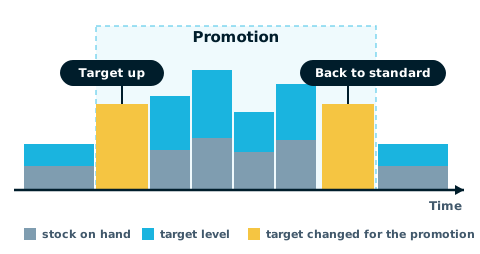
Allocate a starting split, then follow real sell-through — move stock to where the promotion actually works, during the promotion
Keep promotional demand separate from baseline so regular targets stay honest
Step ordering down automatically the day the promotion ends
Review each campaign: lost sales during, leftovers after — both measured, both improvable
Horizon treats a promotion as a temporary layer on top of normal targets: allocation follows sell-through during the wave, the layer disappears on the end date, and baseline targets never get polluted by the spike.
Related: Glossary of inventory-flow terms · Horizon vs the alternatives · Value Calculator
Common questions
Why do promotions always leave overstock?
How do I keep promo spikes from distorting future orders?
See this on your own data.
The free demo begins with a real simulation on your history — where sales, cash and time are leaking, and what the system would have done instead.