Where Does the Market End?
CHAPTER 1
One question that changes how you see market size
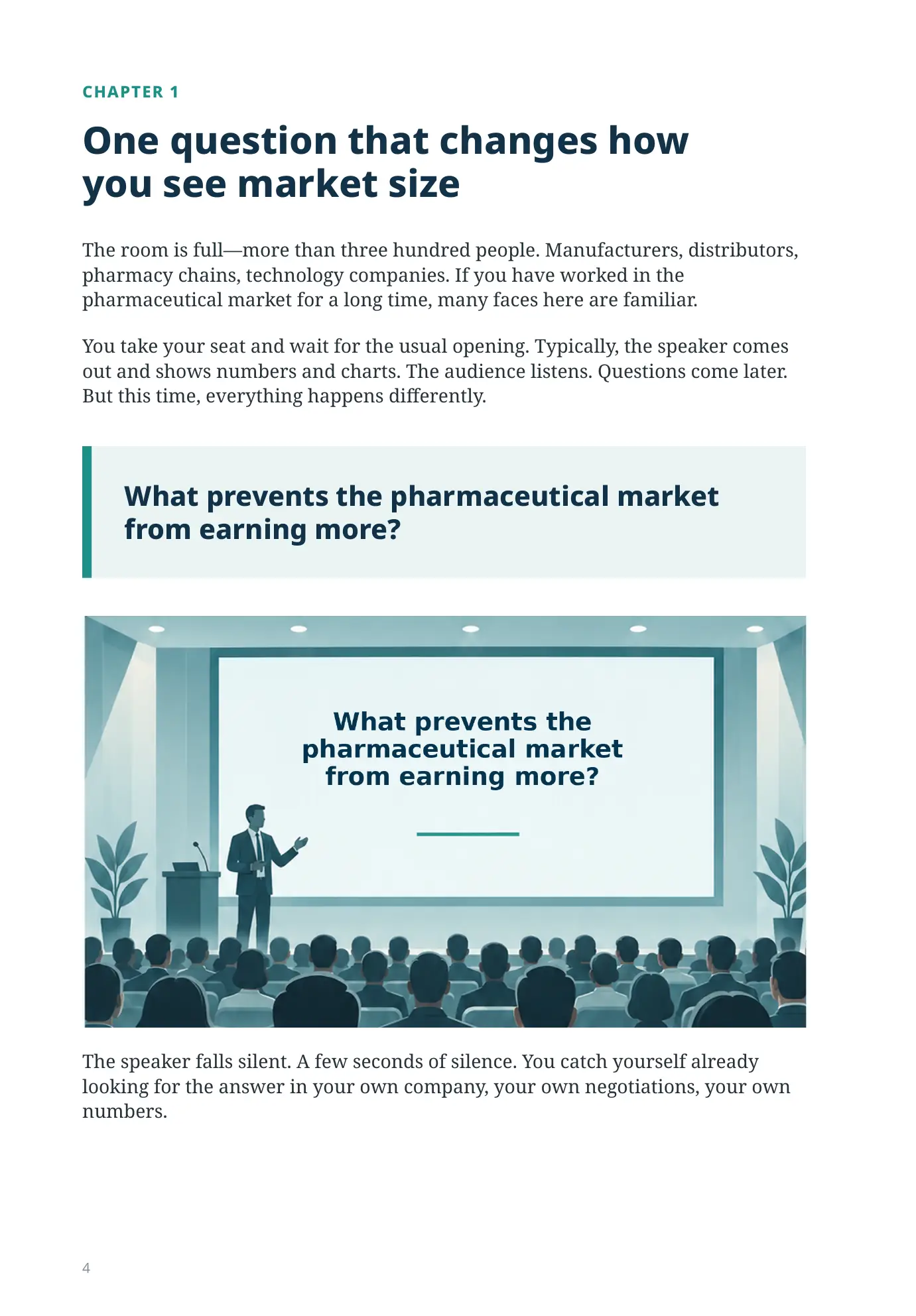
The room is full—more than three hundred people. Manufacturers, distributors, pharmacy chains, technology companies. If you have worked in the pharmaceutical market for a long time, many faces here are familiar.
You take your seat and wait for the usual opening. Typically, the speaker comes out and shows numbers and charts. The audience listens. Questions come later. But this time, everything happens differently.
What prevents the pharmaceutical market from earning more?

The speaker falls silent. A few seconds of silence. You catch yourself already looking for the answer in your own company, your own negotiations, your own numbers.
First—silence.
Not the short pause after which a speaker answers their own question. He is actually waiting. Someone looks up from their phone. A slight smile moves through the rows—three hundred people are simultaneously trying to work out how they themselves would answer.
…and then the room comes alive.
Price.
Government regulation.
Competition.
Low margin.
We need to sell more.
More pharmacies.
Almost every one of these answers has already crossed your mind. They are all reasonable. But the speaker changes the scale of the question.
Speaker: Tomorrow, manufacturers could produce twice as many medicines. Would the market automatically become twice as large?
Audience: No.
Speaker: What if we opened twice as many pharmacies?
At the foundation of the market are people who need treatment and the money that they—or someone on their behalf—can direct toward that treatment.